


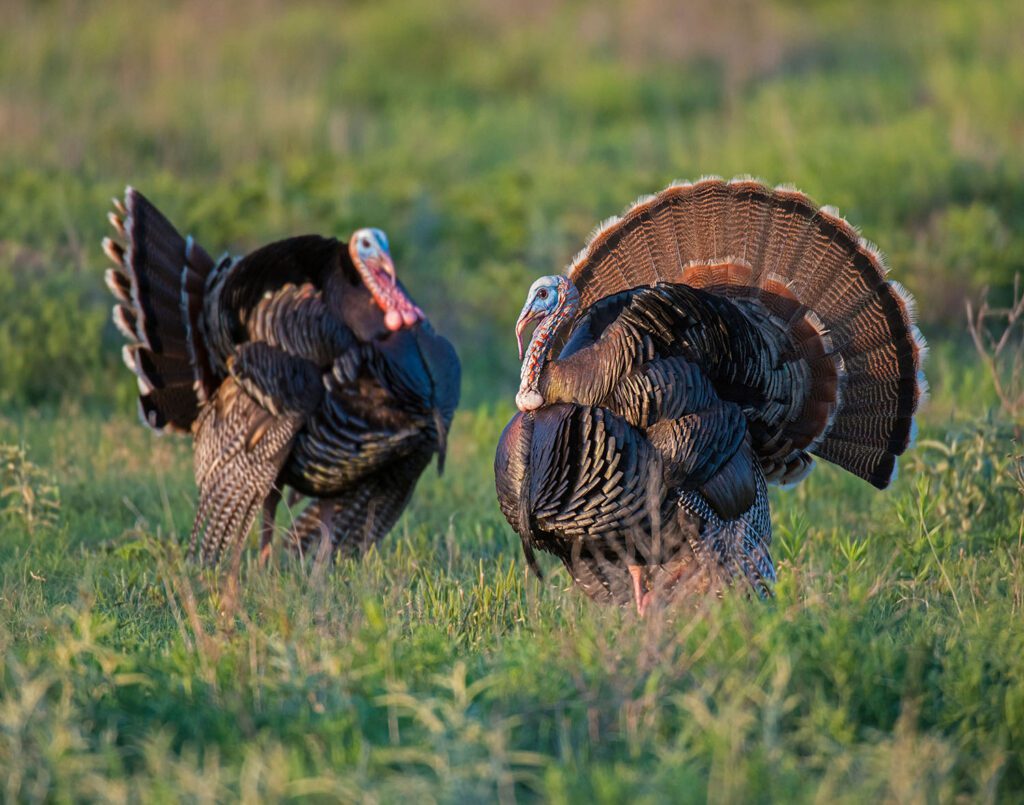
If you’re considering heritage turkeys for your operation, there’s a lot to like about them. But before you commit to a heritage breed, it’s worth understanding what that choice actually means for your production timeline, your meat yield, and your bottom line.
This guide covers what makes a turkey a heritage bird, how to care for your flock, and why a heritage-style bird like the Broad Breasted Bronze might be the smarter fit if growth rate and economic return are a priority.
Not every turkey earns the heritage label. To qualify, a bird must meet three standards:
That slow growth rate is what sets heritage turkeys apart from broad-breasted turkeys, which are bred for speed and maximum breast size. Heritage breeds carry genetics closely tied to wild turkeys, which is why they’re naturally built for the outdoors, strong foragers, and capable of sustaining their own flock without human-assisted reproduction.
That combination of traits is a real advantage in the right operation. But slower growth also means more feed, more time, and a lower meat yield per bird. Those trade-offs are worth factoring in before you order.
Your breed choice should match your goals. Here’s a quick breakdown of the most common options:
Each of these is a true heritage breed that mates naturally and can sustain its own flock year after year.
Here’s what a lot of heritage breed content skips over. True heritage turkeys are slow growers by design, and that longer feed period means higher input costs and less meat per bird. If production efficiency and economic return matter to your operation, a heritage breed is a tough sell.
They make sense when you want a self-sustaining flock, traditional flavor, or when the heritage label adds direct value to your product. Outside of those goals, the numbers don’t work in your favor.
Freedom Ranger Hatchery’s Broad Breasted Bronze isn’t a true heritage turkey. It’s a heritage-style bird developed from Bronze genetics but bred for faster growth and higher meat yield. Bronze turkeys can reach 30 pounds in as little as 22 weeks, compared to the significantly longer timeline of a true heritage breed.
If you want the Bronze look with outdoor adaptability but also need real production numbers, the Broad Breasted Bronze bridges that gap. For growers focused purely on efficiency, the Heavy White Turkey goes even further. It doesn’t carry heritage genetics, but Heavy White toms can also reach 30 pounds in 16 to 20 weeks. Both do well in pastured, free-range, and indoor environments.
Raising turkeys well starts with a solid brooder setup. Start at 95 to 98 degrees Fahrenheit for the first two weeks, then drop by 5 degrees each week until you reach about 70 degrees. Use clean pine shavings for bedding, avoid cedar or sawdust, and round off corners to prevent piling. Keep poults away from chickens throughout brooding, as chickens can carry pathogens that young poults can’t handle.
Feed a 28% protein starter for the first six to eight weeks, then step down to a 22% grower feed. Don’t use standard chick starter. Turkeys have different nutritional requirements, and the wrong feed affects both growth and immune function. Plan for 1.5 to 2 square feet per bird through week 16, stepping up to 3 to 5 square feet near processing weight. Keep ventilation strong to prevent ammonia buildup from wet litter.
Heritage turkeys are the right call if natural reproduction, traditional flavor, or a self-sustaining flock is what you’re after. They’re not the right fit if faster growth and higher meat yield are your priority. The economics of a true heritage turkey simply don’t compete with a heritage-style bird like the Broad Breasted Bronze, and that’s a practical reality worth knowing before you order.
If you know your production goals, choosing the right bird is straightforward. If you’re still sorting it out, give us a call. We’re happy to help you match a breed to what you’re actually trying to accomplish.
For most growers, the Broad Breasted Bronze is the smarter choice. You get the same Bronze look and outdoor hardiness as a heritage bird, but it reaches 30 pounds in just 22 weeks instead of taking much longer. Heritage turkeys still work well if you want a flock that reproduces on its own, a premium heritage product to sell, or that traditional flavor. But if your goal is efficient production, the Bronze is the better bird.
Ready to get started? Browse our turkey poults at Freedom Ranger Hatchery. Ship dates fill up fast, so don’t wait to lock in your order.