


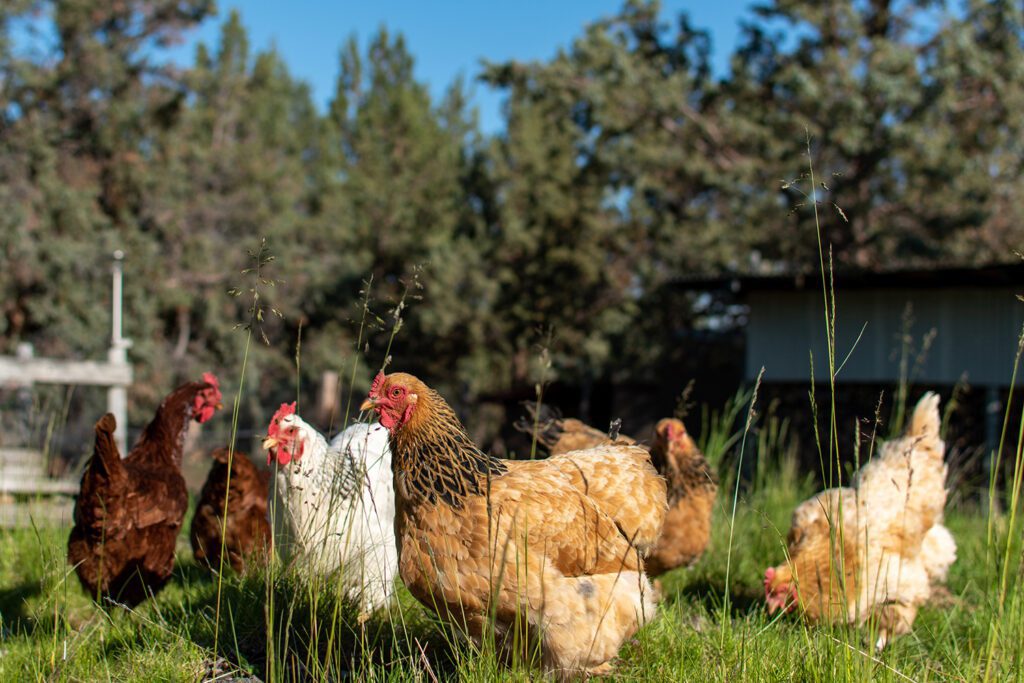
You’ve already got a flock going, and now you’re ready to bring in more birds. That’s a great next step, and it’s more manageable than it might seem.
The part that trips most people up isn’t the birds themselves. It’s the transition.
Your existing flock has a social structure already in place, and new arrivals disrupt it. That’s where the pecking order comes into play, and where most integration problems start.
Adding new chickens to your flock goes more smoothly with a slow, staged approach. Here’s how to do it right.
Before your new birds go anywhere near your existing flock, quarantine them. Keep them in a completely separate space for at least two to three weeks.
This gives you time to catch any signs of illness before they can spread to the birds you already have.
Use separate feeders, waterers, and bedding for each group. Don’t share tools between the two, and wash your hands between handling them. It’s a simple step, but it protects your whole flock and gives new arrivals time to settle after shipping.
Once your new birds have cleared quarantine and look healthy, don’t open the gate just yet.
A visual introduction period, sometimes called the “look but don’t touch” phase, is one of the most important steps in adding new chickens to your flock. It’s also the one most people skip.
Set up a temporary wire pen or dog kennel inside or alongside your run. Place your new birds inside it. Your established group can see and hear them through the barrier, but there’s no physical contact.
Keep this going for about a week. Make sure your new birds have their own feed and water inside the enclosure at all times. They shouldn’t have to compete for resources yet.
By the end of this phase, both groups should be mostly ignoring each other. That’s your green light to move forward.
After a week of looking at each other through a barrier, open the enclosure and let the new birds come out when they’re ready. Don’t rush it.
Plan your first open contact sessions when the birds have plenty of room to move. If you’re free-ranging, use that to your advantage. More space means more room to avoid confrontation.
Some chasing and posturing is normal. The pecking order is being renegotiated, and that involves some mild friction.
What you don’t want to see is one bird being cornered, injured, or consistently blocked from food and water. If that’s happening, return the new birds to their enclosure for a few more days and try again.
Before your new birds move in full-time, take a look at your chicken coop and run setup. A few practical adjustments can reduce a lot of the friction during integration.
Here’s what to check:
The more comfortable your setup, the less your birds have to fight over. Small changes to your space go a long way during the first few weeks of integration.
Don’t assume everything’s settled once the birds are all together. Keep an eye on your chickens to your flock for the first few weeks.
Watch for birds that look thinner than expected, feather damage, persistent chasing, or anyone consistently being pushed off the feeder.
If one bird is causing most of the trouble, pull that bird out temporarily. Separating the aggressor resets the group dynamic and often solves the problem faster than you’d expect.
The process takes a few weeks, but it doesn’t have to be complicated. Quarantine, a visual introduction, supervised contact, and a well-prepared setup give your birds the best shot at a smooth transition.
Follow the steps, give it time, and the pecking order will sort itself out.
When you’re ready for adding new chickens to your flock, Freedom Ranger Hatchery carries a strong selection of day-old chicks shipped within 24 hours of hatching. Browse our breeds and start your order online.