


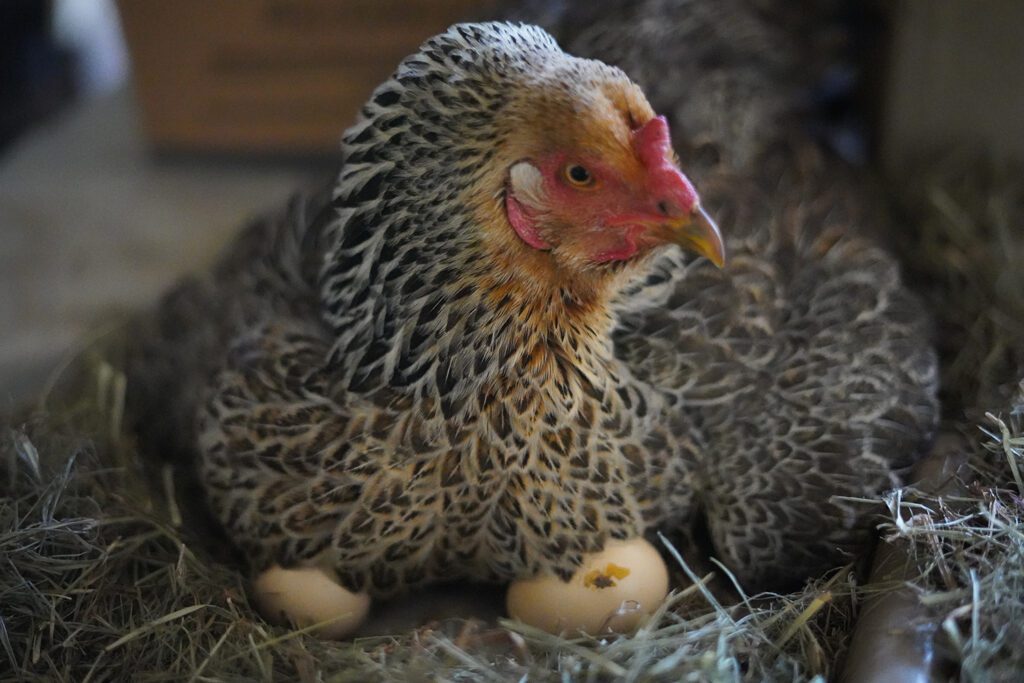
If you’ve got fertile eggs and a hen with hatching on her mind, you don’t need an incubator to get chicks. Broody hens handle temperature, humidity, and egg-turning on their own. Your job is to recognize what’s happening, set things up right, and stay out of the way. Here’s everything you need to know to let your hen do what she’s built to do.
A broody hen is a hen that has decided she’s going to sit on eggs and hatch them. Broodiness is driven by instinct and hormones. Once it kicks in, she’ll stay on the nest most of the day and night, leaving only briefly to eat, drink, and relieve herself.
You’ll notice her broody behavior pretty quickly. She’ll puff up her feathers, growl or peck when you get close, and flatten herself over the eggs to protect them. She may also pluck feathers from her breast to get her warm skin in direct contact with the eggs. It can look alarming if you haven’t seen it before, but it’s completely normal.
A few other signs to look for:
Not every hen will go broody, and not every broody hen will follow through to hatch day. Some give up midway. That’s worth knowing before you commit your best fertilized eggs to a hen you haven’t seen sit before.
Some broody breeds are far more committed than others. If you’re planning to hatch eggs naturally, your breed choice matters.
Breeds known for strong brooding instinct include:
Production-focused breeds like the Novogen Brown or Novogen White are bred for high egg output, not broodiness. Don’t expect them to sit.
Once you’ve confirmed she’s broody, your next step is setting up a dedicated nest box in a quieter part of the coop. If she’s sitting in a shared community nest, other hens will keep adding to her clutch, and she may accidentally leave the wrong eggs behind when the chicks hatch.
Move her at night when she’s calm. Place her gently into her new spot with the eggs already in position underneath her. Use clean bedding, keep it low to the ground so chicks won’t fall far, and give her easy access to food and water nearby.
She needs to be able to leave and return without help. Keep her area separate but close enough to the flock so she doesn’t become too isolated.
The right size clutch of eggs depends on the size of your hen. A standard-sized hen can comfortably cover 10 to 12 eggs. A small hen like a Bantam Silkie does best with 6 to 8. If she can’t fully cover the eggs, the ones on the outside won’t develop properly.
Only place fertilized eggs under her. If you don’t have a rooster, the eggs won’t develop regardless of how long she sits. You can source fertilized hatching eggs from a trusted hatchery if your own flock isn’t producing them. At Freedom Ranger Hatchery, we offer hatching eggs that work well for natural incubation by a broody hen, including options popular with home educators and hobby farmers.
Mark each egg with a pencil so you can identify and remove any that get added to the nest by other hens.
Hatching eggs naturally takes 21 days. During that time, your hen does most of the work. Your role is to monitor, not to micromanage.
Check daily:
Around day 7 to 10, you can candle the eggs to check for development, though this step is optional if you trust your hen and your rooster is proven fertile.
By day 18, you’ll want to minimize disturbances. Leave her alone as much as possible. Chicks will begin pipping (breaking through the shell) around day 21. Don’t intervene unless a chick is clearly stuck and in distress. The hen usually manages the process without help.
Once the chicks have dried off and are active, she’ll take over brooding and teaching them to eat and drink. You won’t need a heat lamp if she’s with them.
Not every situation calls for letting a hen sit. If she’s gone broody but you don’t have fertilized eggs, or you need her back in egg production, breaking broodiness is a reasonable option.
The most effective method is removing her from the nest box repeatedly and keeping her in a well-lit, well-ventilated space with no nesting material for a few days. This interrupts the hormonal cycle. It’s not harmful to the hen. How quickly she snaps out of it depends on the individual bird and how deep into broodiness she already is.
Whether you’re letting a hen sit for the first time or adding new genetics to your backyard flock, starting with quality stock matters. At Freedom Ranger Hatchery, we’re a family-owned hatchery based in Lancaster, PA, and we’re here to help you make decisions that work for your setup and your goals.
Browse our hatching eggs and day-old chick options and start your flock with breeds built for the backyard.